Why Your Payslip Doesn't Match What You Expected
Confused why your take-home pay is lower than expected? Here's what tax codes, National Insurance, pensions, and emergency tax actually mean for your payslip.
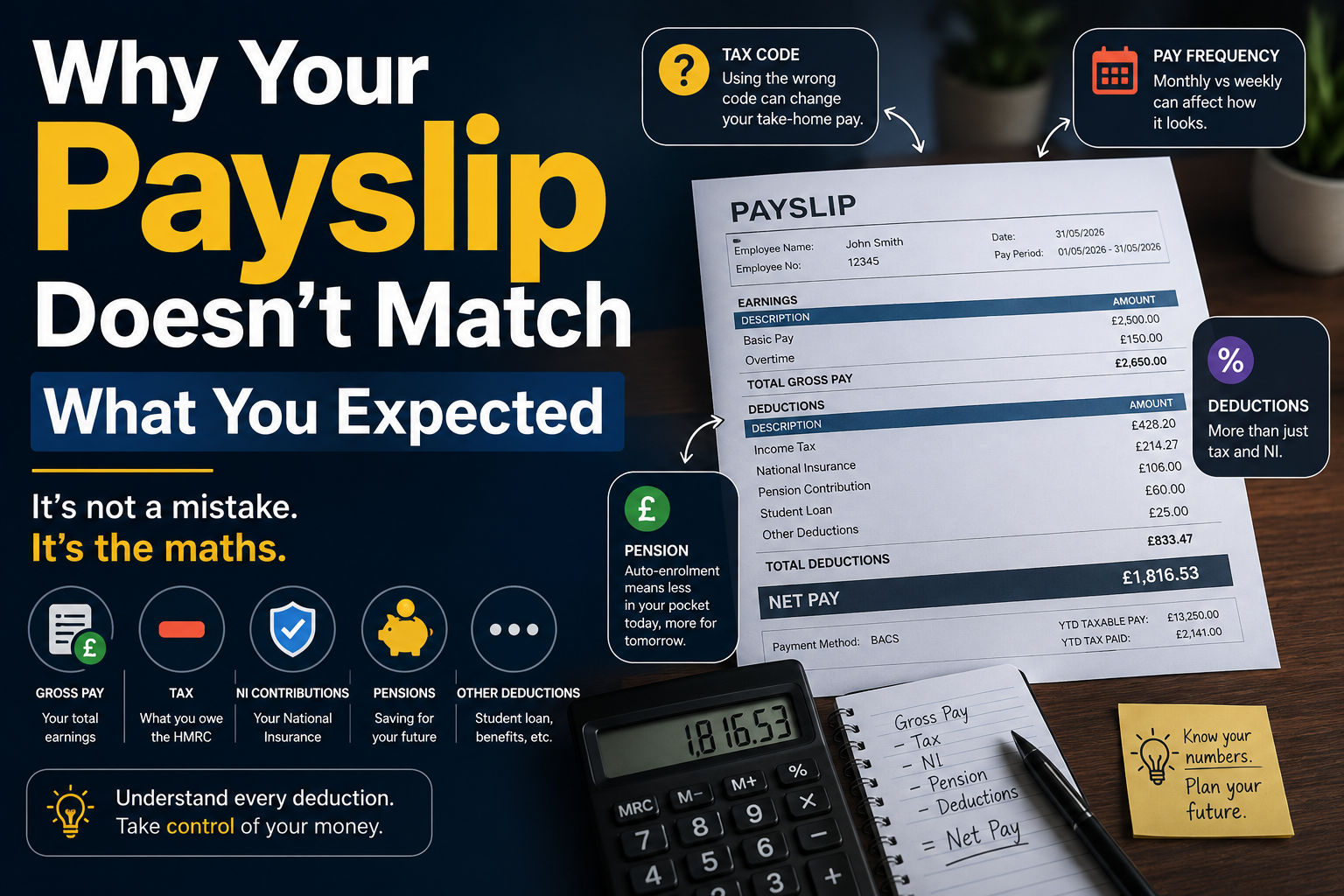
The Gap Between "What I Was Offered" and "What Actually Hit My Account"
Almost everyone has had this moment: you agree a salary, do the mental math on what that means per month, and then your first payslip lands noticeably lower than expected. It's not a mistake (usually) — it's a handful of deductions most job offers never explain clearly.
Gross Pay vs Net Pay
Gross pay is the number in your contract — your full salary before anything is taken out. Net pay (take-home pay) is what actually reaches your bank account after tax, National Insurance or Social Security, pension contributions, and any other deductions. The gap between the two is usually bigger than people expect, especially the first time they see it broken down.
Where the Money Actually Goes (UK Example)
| Deduction | What it's for |
|---|---|
| Income Tax | Calculated on income above your tax-free personal allowance, at increasing rates for higher bands |
| National Insurance | Funds state pension and certain benefits; calculated separately from Income Tax |
| Pension contribution | Often auto-enrolled by default; usually a percentage of qualifying earnings |
| Student loan repayment | Only applies if you have an outstanding student loan above the relevant threshold |
US and EU payslips follow the same basic principle — gross pay minus tax and social contributions — but the specific deductions and thresholds vary significantly by country.
Why Your Tax Code Matters More Than You Think
In the UK, your tax code tells your employer how much tax-free income you're entitled to before deductions start. An incorrect tax code — common when starting a new job, having multiple income sources, or after a job change mid-year — can result in being taxed more (or less) than you actually owe, sometimes for months before it's corrected.
Why the First Payslip Sometimes Looks Worse
Starting a new job partway through a tax year, without your previous employer's pay information on file yet, can trigger an "emergency tax code" that overtaxes you temporarily. This usually self-corrects within a payslip cycle or two once your full tax details are confirmed, and any overpaid tax is refunded automatically through payroll.
The Bonus/Overtime Surprise
A one-off bonus or overtime payment often looks like it's taxed at a much higher rate than your regular salary. What's actually happening is that payroll systems typically calculate tax as if that higher amount were your normal pay for the whole year, pushing more of it into higher tax bands for that pay period — it usually balances out over the year, but it's a common source of confusion in the moment.
Questions Worth Asking About Your Own Payslip
- What's my actual tax code, and does it look right for my situation (single job, no benefits, etc.)?
- Am I auto-enrolled in a pension, and at what contribution percentage?
- Are there deductions I don't recognize — worth asking payroll directly rather than assuming they're correct.
See Your Real Take-Home Pay Before You Accept an Offer
Before agreeing to a salary, it helps to know what actually lands in your account each month. Our UK Salary Calculator breaks down gross to net pay instantly, including tax, National Insurance, and pension contributions.
Frequently Asked Questions
Why is my take-home pay different from a coworker's on the same salary?
Differences in pension contribution rates, student loan repayment plans, tax codes, and benefits-in-kind can all cause two people on identical salaries to take home different amounts.
Will I automatically get back overpaid emergency tax?
In most cases yes — once your correct tax code is applied, any overpayment is typically refunded through your payslip automatically, without needing to file a separate claim.
Does a pay rise always mean a proportionally bigger payslip increase?
Not necessarily — if a raise pushes part of your income into a higher tax band, or past a pension auto-enrollment threshold, your take-home increase can be smaller than the raise itself might suggest.