
What to Expect From the Autumn Budget on 28 October 2026
Chancellor John Healey delivers his first Budget on 28 October 2026. Here's what's already confirmed, what's under discussion, and how to prepare your finances either way.
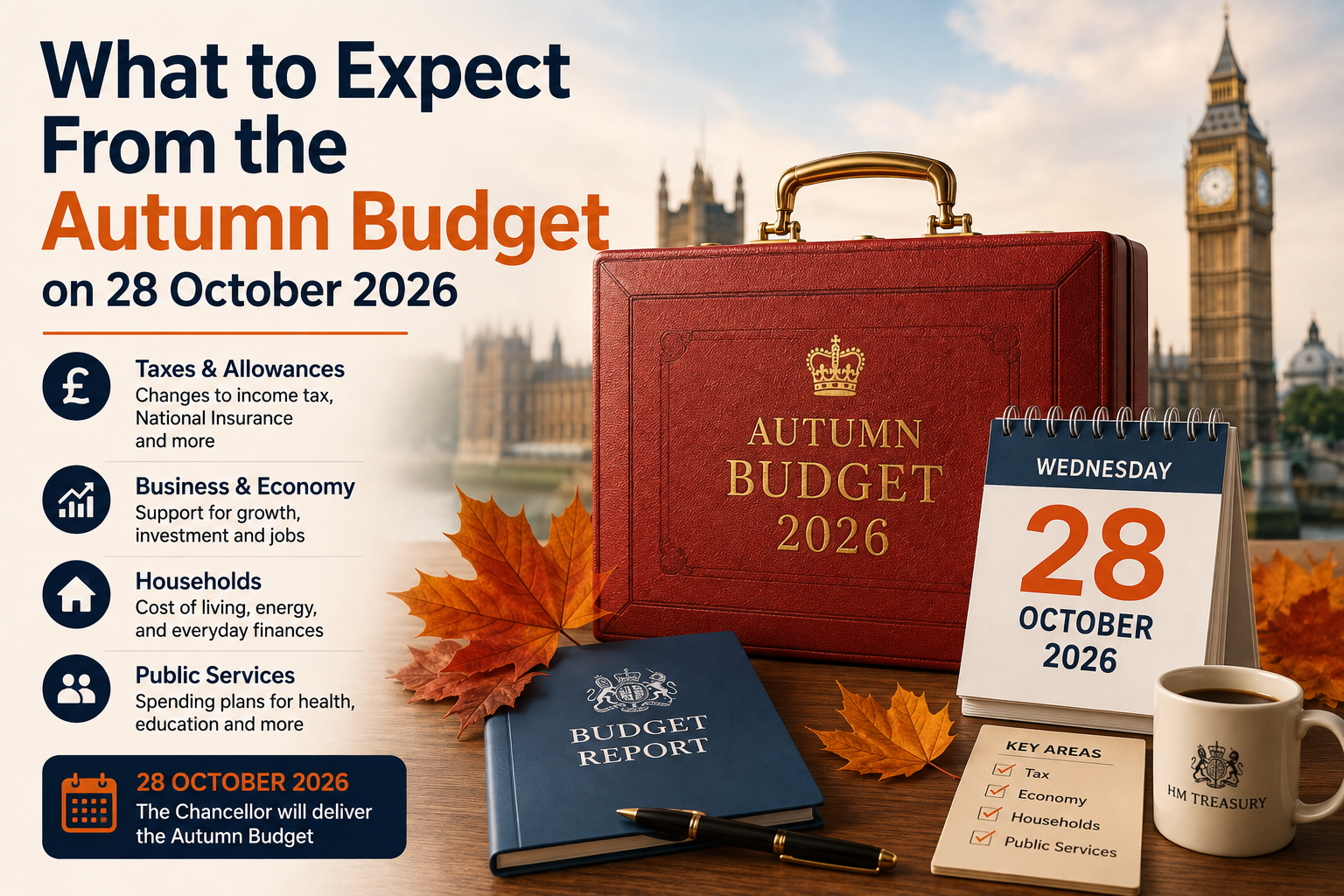
A new Budget, a new Chancellor
The UK's next Budget is scheduled for 28 October 2026, and it's a significant one — the first delivered by Chancellor John Healey, just months into Andy Burnham's time as Prime Minister. New leadership at the top of the Treasury usually means at least some change in direction, so this Budget is being watched more closely than most.
What's already confirmed and locked in
Some changes were set in the previous Budget and are simply taking effect on their scheduled dates, regardless of what happens on 28 October:
- Income tax and NI thresholds frozen until 6 April 2031 — meaning more people get pulled into higher tax bands as wages rise ("fiscal drag").
- Dividend tax up 2 percentage points from April 2026, to 10.75% (basic rate) and 35.75% (higher rate).
- Savings and property income tax up 2 percentage points from 2027/28, eventually reaching 47% at the additional rate.
- Cash ISA allowance cut to £12,000 from 2027/28 (see our separate piece on this).
- Two-child benefit cap scrapped from April 2026.
- Fuel duty's temporary 5p cut tapering away starting August 2026, gone entirely by March 2027.
What's under discussion for the October Budget itself
Nothing here is confirmed, and speculation ahead of every Budget tends to run well ahead of reality — but the following are being actively floated:
- Further borrowing for infrastructure and housing — reports suggest up to £9bn earmarked for growth-focused spending.
- Adult social care funding remains an open question, with the Chancellor not ruling out tax rises to cover it.
- A blanket inheritance tax on all estates has reportedly been ruled out — government sources say there are "no plans" for this, despite speculation.
The Chancellor has framed this as a Budget aimed at fiscal credibility — sticking to existing fiscal rules while directing more spending toward regions outside London.
How to prepare without overreacting
Budget speculation is a genre unto itself, and a lot of what gets reported in the weeks before never actually happens. That said, a few sensible moves apply regardless of what's announced:
- Use tax-free allowances you already have before the tax year ends — ISA limits, pension contributions, and CGT allowances don't carry over.
- Check where your income sits relative to tax band thresholds, since frozen thresholds mean pay rises can quietly push you into a higher bracket.
- Don't make big financial decisions purely on rumour. Wait for the actual announcement on 28 October before restructuring savings, pensions, or property based on speculation.
We'll update this post once the Budget is delivered with what actually changed versus what was just noise beforehand.