
Fuel Duty's 5p Cut Is Disappearing — What It'll Cost You by 2027
The temporary 5p-a-litre fuel duty cut starts tapering away from August 2026 and is gone completely by March 2027. Here's what that means for your actual running costs.
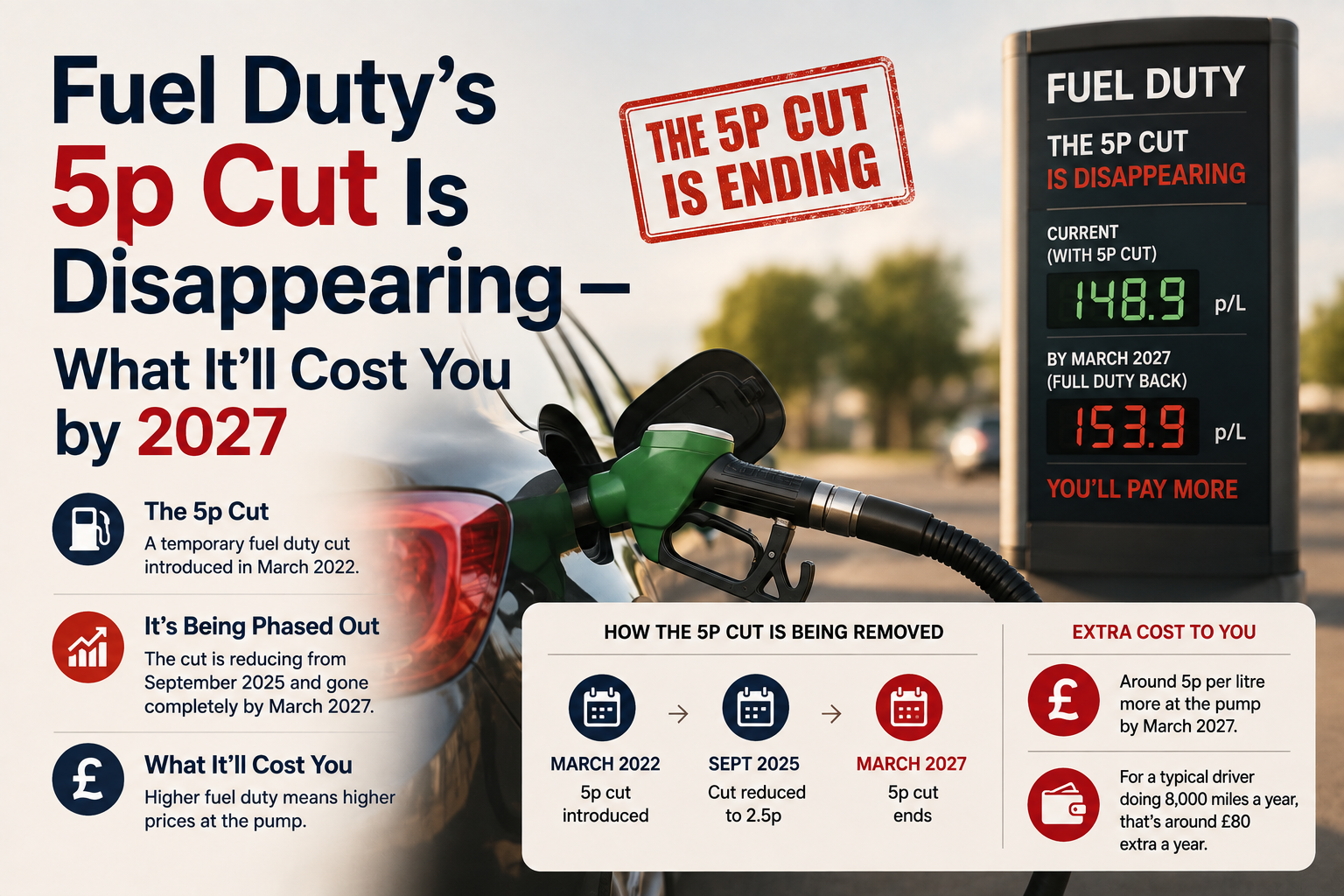
What's happening
The temporary 5p-a-litre cut to fuel duty — in place since 2022 and repeatedly extended — is finally being wound down. From August 2026, the cut starts tapering away gradually, disappearing completely by March 2027.
It's worth being clear about what this actually is: fuel duty is a fixed tax per litre, separate from VAT and separate from the wholesale price of petrol or diesel itself. The 5p cut has effectively meant paying 5p less tax on every litre for the past few years. That's now being phased out.
What it actually costs you
5p a litre doesn't sound dramatic on its own, but it adds up faster than people expect:
- A 55-litre tank costs roughly £2.75 more to fill once the cut is fully gone, purely from this change — before any movement in the underlying fuel price.
- For someone filling up weekly, that's about £143 more a year, again just from the duty change.
- For higher-mileage drivers — reps, tradespeople, delivery drivers — the annual cost is proportionally higher.
This lands alongside other April 2026 increases already scheduled — council tax, car tax (VED), and air passenger duty are all rising too, so it's not an isolated hit; it's one line in a wider set of "Awful April" cost increases.
Why it's happening now
The 5p cut was introduced as a temporary response to a fuel price spike, and has been extended multiple times since. Letting it taper out rather than end abruptly is presumably meant to soften the impact, but the end result over the next several months is the same: a gradual return to pre-2022 fuel duty rates.
What to actually do about it
- Recalculate your real monthly driving cost now, rather than being surprised by it in instalments over the next several months. If you commute or drive for work, this is worth building into your budget properly rather than absorbing it invisibly.
- If you're weighing up a car change, factor the full post-taper fuel cost into any comparison between petrol, diesel, and EV running costs — the gap between them just widened slightly.
- If you're self-employed and claim mileage, keep an eye on whether HMRC's approved mileage rates get reviewed in light of rising duty — they don't always move in step with actual costs.
None of this is dramatic on a single tank. Over a year of normal driving, it's a genuine and permanent increase to your cost of ownership — worth knowing about rather than noticing gradually at the pump.