
Cash ISA Limit Cut to £12,000: What It Means for Your Savings
From 2027/28 the amount you can put in a cash ISA drops to £12,000 for under-65s, though the overall £20,000 ISA allowance stays the same. Here's what changes and how to plan around it.
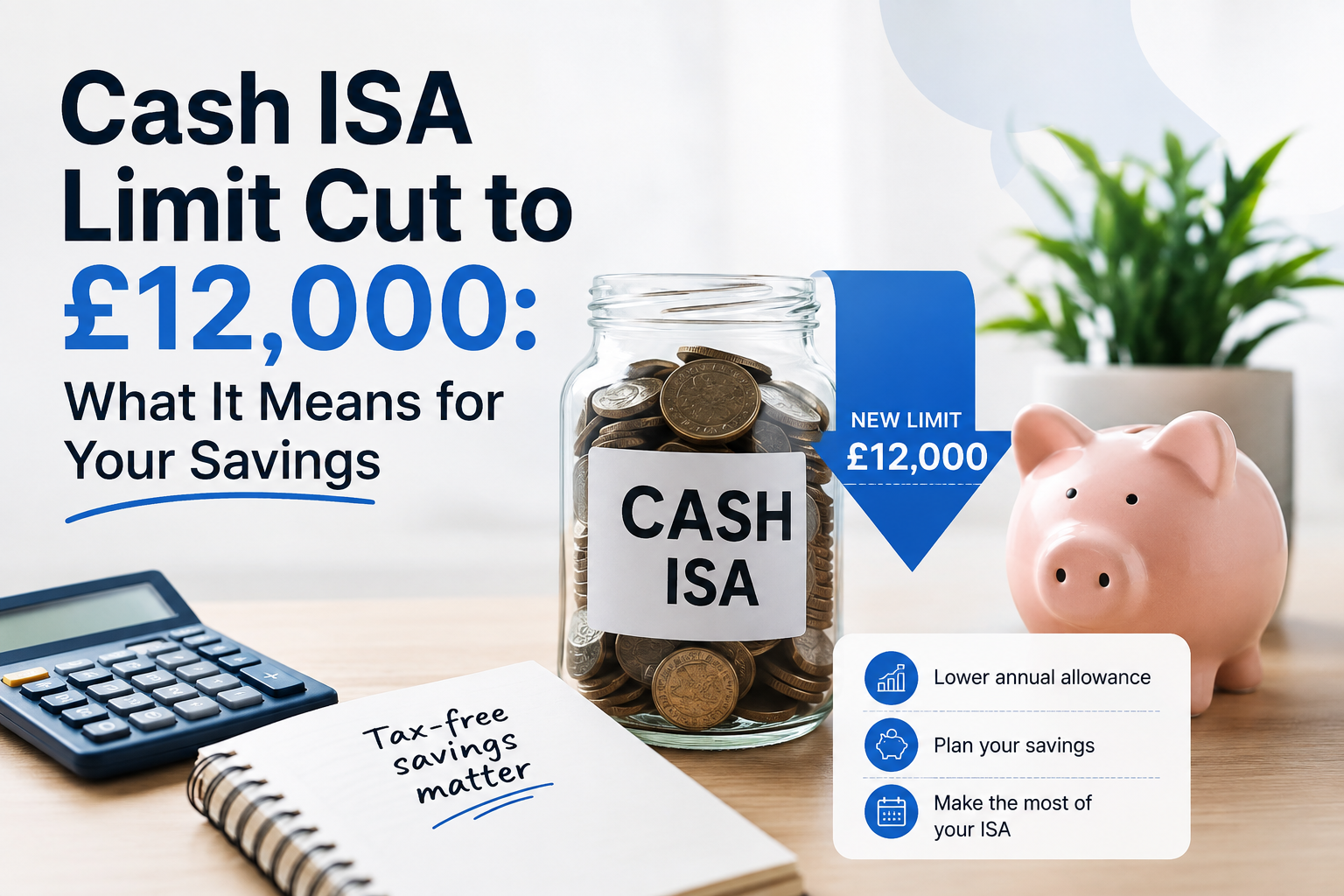
What's changing
From the 2027/28 tax year, the maximum you can pay into a cash ISA each year is being reduced to £12,000 for savers under 65. The overall ISA allowance stays at £20,000 — the difference just has to go somewhere else, typically a stocks and shares ISA.
If you're 65 or over, the cash ISA limit isn't changing, so this mainly affects working-age savers who like keeping their money in cash rather than investments.
Why the government is doing this
The stated aim is to nudge more household savings out of low-yield cash and into investments, on the theory that this supports UK companies and growth. Whether that actually changes saver behaviour, or just annoys people who don't want stock market risk, is genuinely up for debate.
Who this actually affects
- Big cash savers. If you've been putting the full £20,000 into a cash ISA every year, from 2027/28 you'll only be able to shelter £12,000 of it from tax that way.
- Emergency fund holders. Many people keep 3-6 months of expenses in cash for a reason — this doesn't change how much cash you can hold, only how much of it sits tax-free in an ISA wrapper.
- Anyone under 65 who's cautious about investing. You'll either need to get comfortable with a stocks and shares ISA for the extra £8,000, or accept that any cash savings above £12,000/year sit outside an ISA and are subject to the Personal Savings Allowance instead.
What this means in practice
Say you want to save the full £20,000 allowance in 2027/28:
- Up to £12,000 can go into a cash ISA — completely tax-free interest.
- The remaining £8,000 either goes into a stocks and shares ISA (tax-free growth, but market risk), or into a normal savings account, where interest above your Personal Savings Allowance gets taxed.
For a basic-rate taxpayer, that allowance is currently £1,000 of savings interest a year before tax applies; for higher-rate taxpayers it's £500. On top of that, savings income tax rates themselves are also rising by 2 percentage points from 2027/28, so interest earned outside an ISA wrapper is becoming more expensive to hold.
What to do before 2027/28 arrives
- Use your current £20,000 cash ISA allowance while it lasts — this change doesn't land until the 2027/28 tax year, so there's time to build up a cash ISA balance at the old limit.
- Start getting familiar with stocks and shares ISAs now rather than scrambling later. You don't have to go all-in on risk — many providers offer lower-volatility fund options.
- Run the numbers on what you'd actually earn. A quick way to see the real difference tax-free cash savings make over several years is to compare compound growth with and without tax on the interest.
This is still a policy detail that could shift before it takes effect, so it's worth keeping an eye on confirmation closer to April 2027 rather than treating it as locked in.