
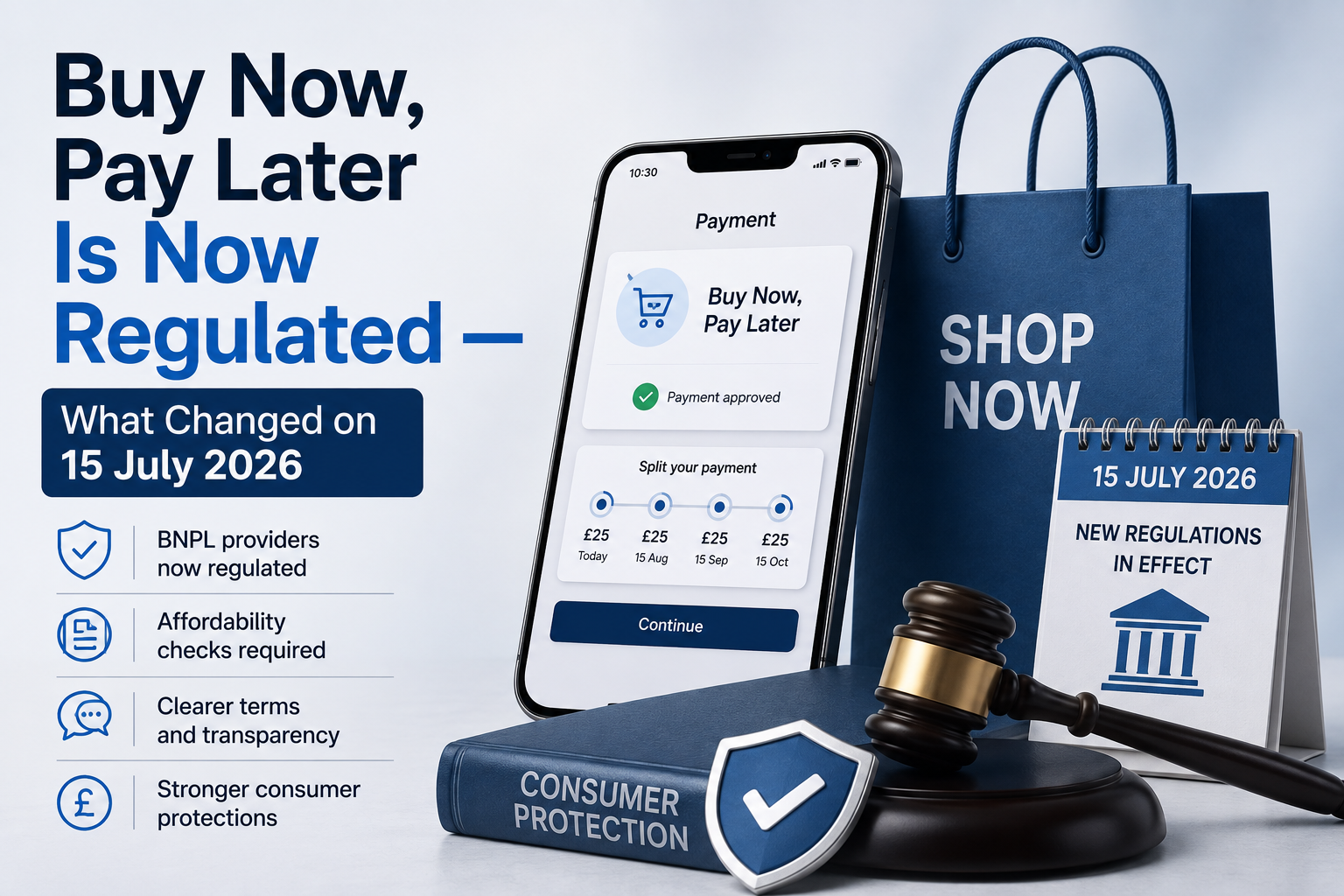
Buy Now, Pay Later Is Now Regulated — What Changed on 15 July 2026
The FCA started regulating Buy Now Pay Later on 15 July 2026. Here's what's actually different for shoppers — affordability checks, clearer terms, and where to complain if something goes wrong.
The short version
As of 15 July 2026, Buy Now Pay Later — technically called Deferred Payment Credit (DPC) — is regulated by the Financial Conduct Authority for the first time. Before that date, providers didn't need FCA authorisation and most of the Consumer Credit Act simply didn't apply to these agreements.
Around one in five UK adults uses BNPL, and total lending through these products had grown to roughly £13 billion. That scale is exactly why regulators stepped in.
What actually changed for shoppers
- Affordability checks. Lenders now have to check you can realistically repay before approving a BNPL agreement, rather than just letting you tap "pay in 3."
- Clearer information upfront. You should now be told exactly when payments are due, how much they'll be, and what happens if you miss one — before you commit, not buried in small print.
- Support if you fall behind. Lenders are required to help customers in financial difficulty and, where relevant, point them toward free debt advice rather than just chasing payment.
- A place to complain. If something goes wrong, you can now take it to the Financial Ombudsman Service — previously BNPL users had no equivalent to fall back on.
What's NOT covered
This is the bit people miss: any BNPL agreement taken out before 15 July 2026 stays unregulated. The new protections only apply going forward. If you've got an older BNPL plan running, none of this applies to it.
It's also worth knowing the rules only bite when the lender and the retailer are different businesses. If a shop provides its own in-house "buy now, pay later" with no separate finance company involved, it isn't caught by this regulation.
Why this matters beyond the paperwork
The real risk with BNPL was never really the lack of a leaflet — it's that spreading a purchase into small instalments makes spending feel painless, which quietly erodes the normal instinct to think twice before buying. Several BNPL agreements running at once, each individually small, can add up to a real monthly commitment that's easy to lose track of.
Affordability checks and clearer disclosure won't fix that on their own. If you're using BNPL regularly, the more useful habit is tracking what you're actually committed to paying each month across every provider — not just checking whether you were approved.
If you're using BNPL right now
- Check whether your current provider is FCA-authorised or operating under temporary permission using the FCA's Firm Checker.
- Add up every live BNPL instalment you owe across all providers — it's easy for these to hide in different apps.
- Treat it as a form of debt in your budget, not "not really spending," because that's exactly what it is.