
Why Mortgage Rates Keep Swinging in 2026 (And What It Actually Costs You)
Mortgage rates have swung sharply in 2026 as geopolitical shocks hit markets. Here's why rates move, what a small rate change costs you monthly, and how to decide when to fix.
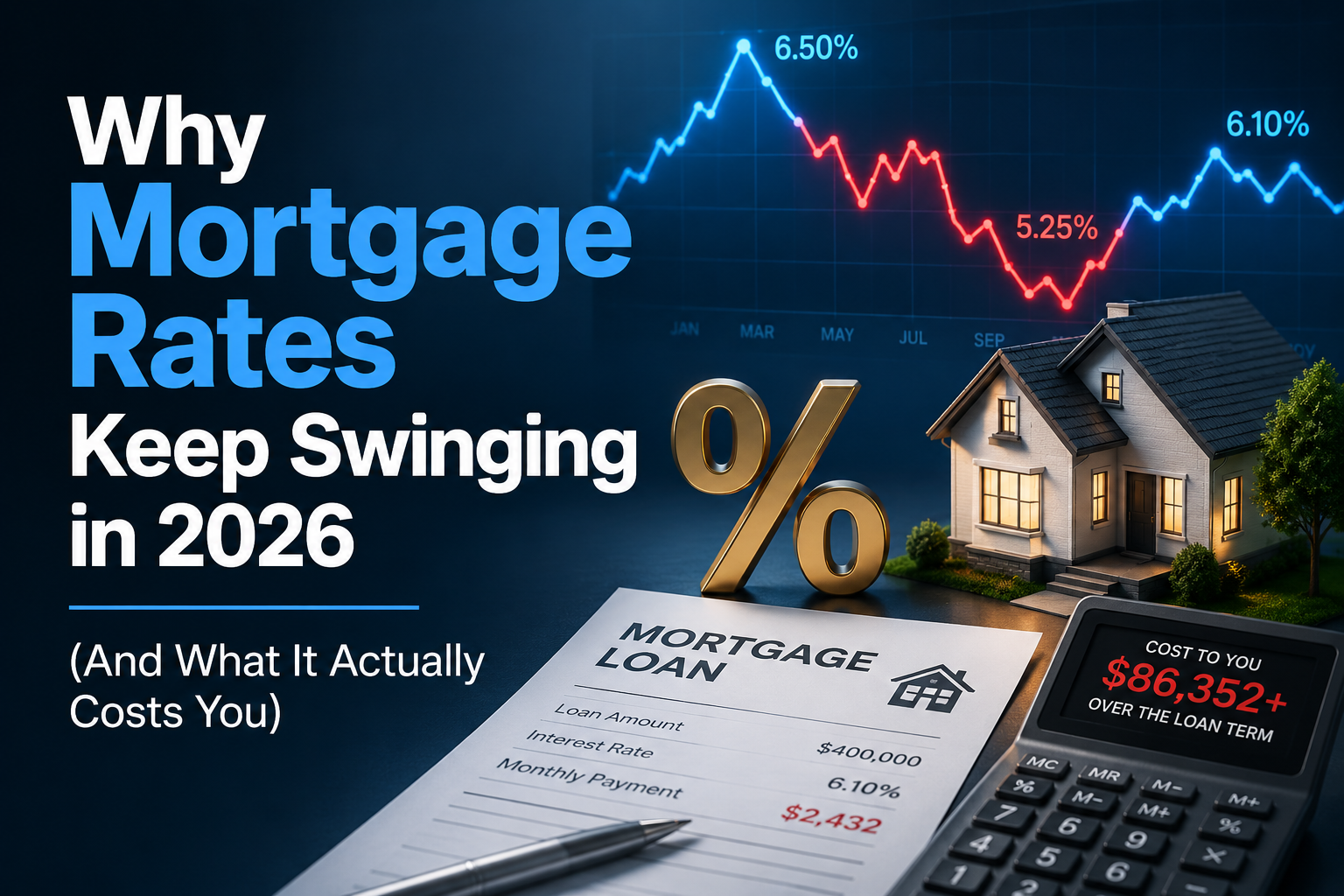
Your Neighbor's Mortgage Quote From Six Months Ago Is Useless Now
If you've shopped for a mortgage at more than one point this year, you've probably noticed the rate you were quoted didn't stay put for long. That's not your broker being sloppy — 2026 has been an unusually volatile year for mortgage rates, and understanding why helps explain both the swings you've seen and what to watch for next.
Why Mortgage Rates Move at All
Mortgage rates aren't set arbitrarily by your bank. They're closely tied to the wholesale cost of borrowing (often called swap rates), which in turn moves with expectations about inflation and central bank policy. When markets expect inflation to rise, or expect a central bank to hold or raise rates rather than cut them, the cost of borrowing for mortgage lenders goes up — and lenders pass that on.
What's Actually Been Driving 2026's Volatility
This year has been a good example of how external shocks ripple into mortgage pricing. Renewed conflict in the Middle East disrupted oil and energy markets, which pushed up inflation expectations. Higher expected inflation pushed bond yields and swap rates higher, and mortgage lenders repriced their deals upward in response — sometimes within days. A brief easing in geopolitical tension brought some relief, before rates crept back up again as tensions resurfaced. The pattern illustrates something worth remembering: mortgage rates respond to global events far more directly than most people expect.
Why a Small Rate Change Matters More Than It Sounds
A 0.5 percentage point move might sound minor, but on a typical mortgage it compounds into a meaningful monthly difference — and an even bigger difference over the life of the loan. On a £250,000 mortgage over 25 years, moving from a 5% rate to a 5.5% rate typically adds somewhere in the range of £70-80 to your monthly payment, and tens of thousands of pounds in additional interest over the full term.
This is exactly why "locking in" a rate as soon as you're offered one worth taking is often better than waiting to see if it improves — rates can move against you just as easily as in your favor, and often faster than expected.
What This Means If You're Fixing Soon
- Shorter fixes have become more popular as borrowers hedge their bets, betting they'll be able to remortgage onto a better deal in a couple of years rather than committing to five.
- Rate predictions are genuinely uncertain right now — even industry experts are divided on whether rates will ease or climb further through the rest of the year, largely because so much depends on unpredictable geopolitical events.
- Product withdrawals happen fast in volatile periods — lenders have pulled deals with little notice when swap rates jump suddenly, so a rate you're quoted today isn't guaranteed to exist next week.
How to Make a Decision Anyway
Nobody can time the market perfectly, and waiting indefinitely for a "better rate" carries its own risk. A more useful approach is running the actual numbers for your situation at today's rate, and at a stress-tested higher rate, so you know your payment is manageable either way — rather than betting your budget on a prediction.
Model Your Own Numbers
See exactly how different rates and terms affect your monthly payment and total interest with our Mortgage Calculator — useful for comparing offers or stress-testing what happens if rates move before you complete.
Frequently Asked Questions
Should I wait for rates to drop before fixing?
It depends on your risk tolerance and timeline. Waiting can pay off if rates fall, but rates have moved upward unexpectedly multiple times in 2026, so there's no guarantee waiting will result in a better deal.
Why did my mortgage offer get withdrawn?
In periods of fast-moving swap rates, lenders sometimes pull products with little warning to reprice them, particularly when wholesale borrowing costs jump suddenly.
Do global events really affect my personal mortgage rate?
Yes — mortgage pricing is directly linked to wholesale borrowing costs, which respond quickly to inflation expectations driven by events like energy price shocks or geopolitical instability.